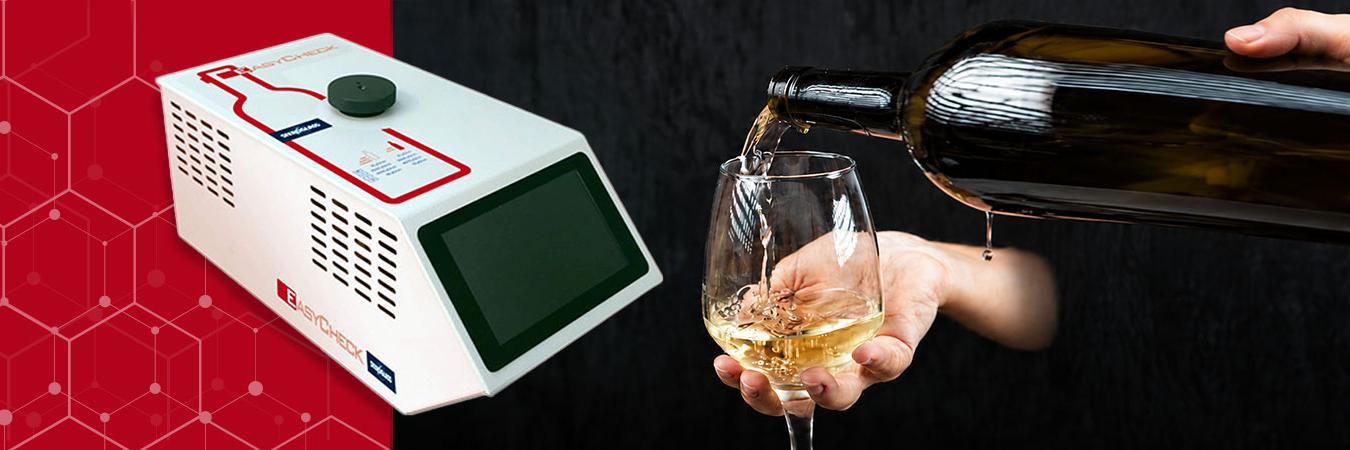
A small or medium-sized winery needs to strike the right balance between product quality, cost control, and fast decision-making.
Throughout the year, wineries manage multiple batches, different types of wine, and numerous operations leading up to bottling. However, they may not always have a fully equipped in-house laboratory or personnel dedicated exclusively to analytical testing.
This does not mean that quality controls can be overlooked.
Among the most important checks before bottling is the monitoring of tartaric and calcium stability in wine, which is essential to reduce the risk of crystals and other precipitates forming in the bottle.
But which wines should be tested? When is the right time to perform these checks? And how can a winery manage them simply, quickly, and independently?
What does it mean to check wine stability?
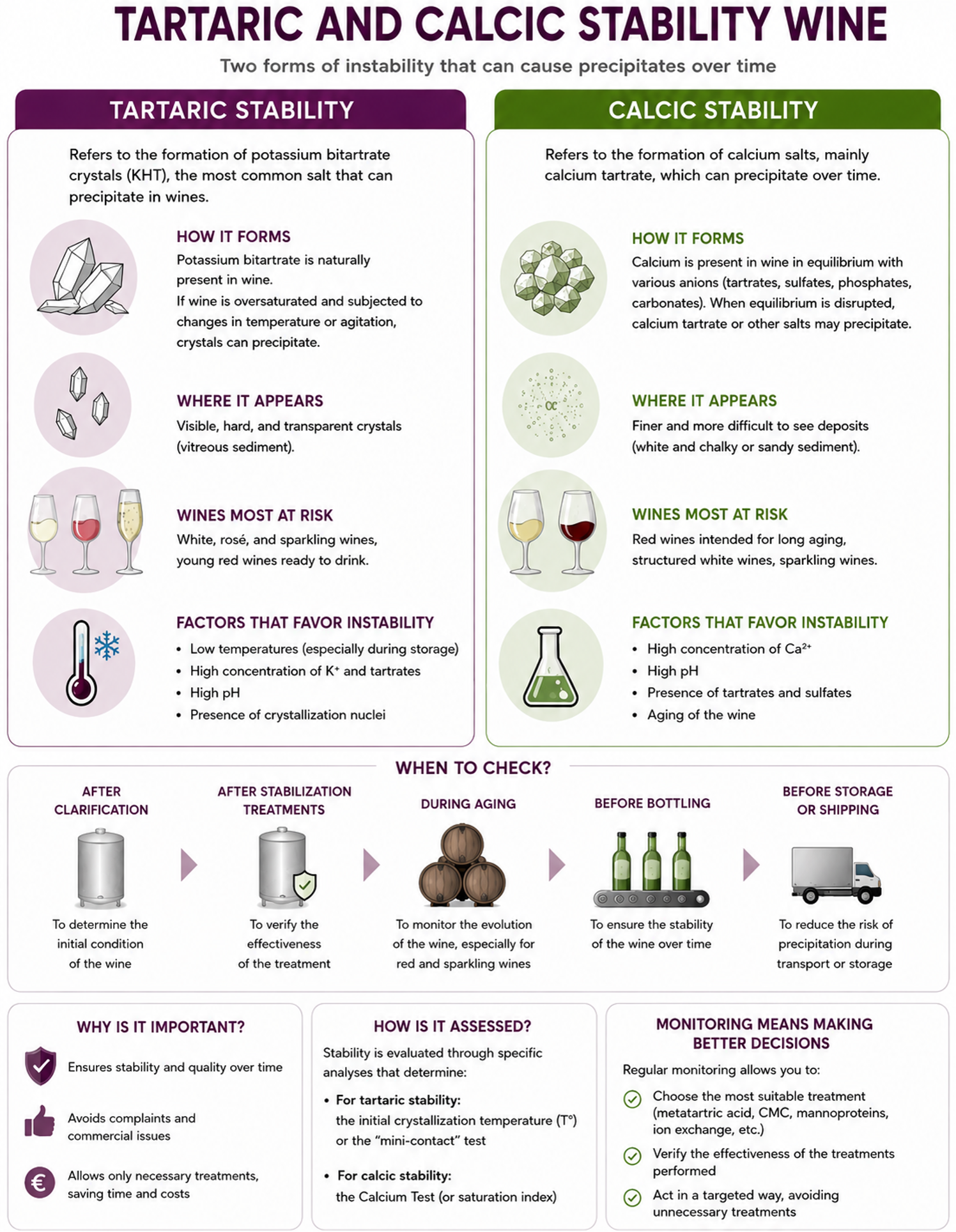
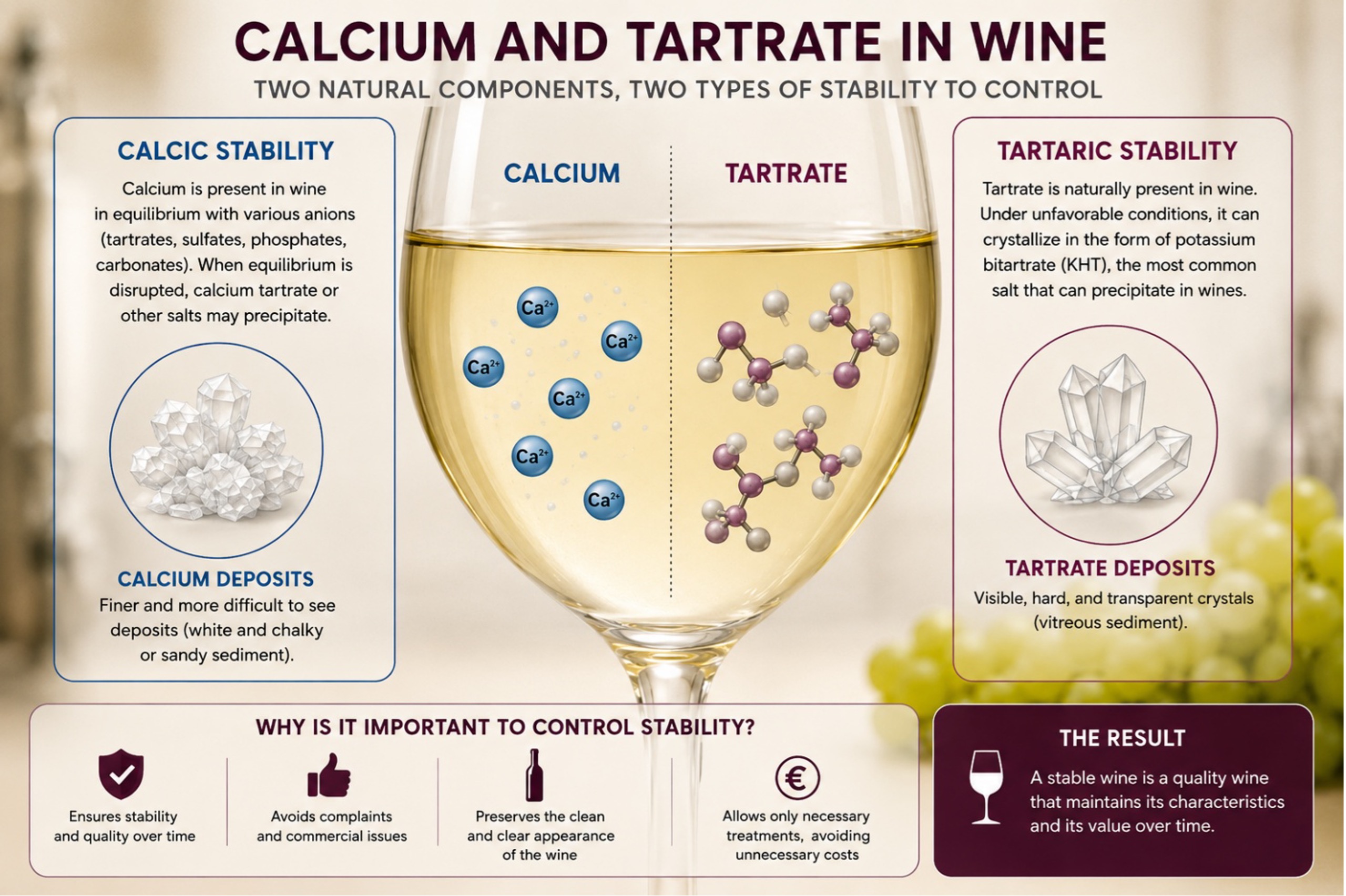
Wine naturally contains salts and other compounds that, under certain conditions, may precipitate over time.
Tartrate and calcium precipitates generally appear in the form of crystals. Calcium precipitates, in particular, may occur even after long periods of time, making them more difficult to predict.
These deposits do not generally represent a product safety issue, but consumers may perceive them as a defect or as a sign of poor quality.
For a winery, especially when wine is intended for distribution, export, or extended shelf life, preventing precipitation helps protect:
- the perceived quality of the product;
- the winery’s brand image;
- customer satisfaction;
- the wine’s commercial stability over time.
Stability testing therefore makes it possible to determine whether the wine is ready for bottling or whether a specific stabilization treatment is still required.
Which wines should be tested?
Stability testing can be performed on wines at different stages leading up to bottling.
It is particularly important for:
- white wines;
- rosé wines;
- red wines;
- sparkling wines;
- wines intended for long-term aging;
- wines intended for export;
- wines that have undergone stabilization treatments;
- batches where the effectiveness of a previously performed treatment needs to be verified.
Testing can be carried out before treatment to assess the wine’s initial condition, and then repeated afterwards to determine whether the treatment has been effective.
It can also be performed again immediately before bottling, providing an up-to-date assessment of the wine’s stability and allowing the winery to make a more informed and confident decision.
The limitations of always outsourcing analyses
Many wineries choose to send their samples to external laboratories.
This can be a useful solution for highly specialized analyses or occasional testing. However, when testing becomes frequent, outsourcing can present several limitations.
Each sample sent to an external laboratory involves:
- sample preparation and identification;
- arranging shipment or delivery;
- the cost of each individual analysis;
- waiting for the result;
- subsequent evaluation of the data.
During the busiest periods of the year, even a few days of waiting can affect winery production schedules.
Bottling may need to be postponed, a production line may be left waiting, or work schedules may have to be reorganized.
Moreover, when every analysis involves both a cost and a waiting time, there is an inevitable tendency to limit the number of tests performed.
The risk is that only certain batches are analyzed, or that testing is carried out only at the end of the process, when corrective action may be more difficult.
EasyCheck brings stability testing directly into the winery
Steroglass EasyCheck has been developed to enable wineries to monitor the tartaric and calcium stability of wine directly in their own laboratory.
The instrument transforms a test that may be perceived as highly specialized into an analysis that can be easily integrated into the winery’s routine operations.
Wineries can therefore analyze their samples whenever necessary, without having to send them to an external laboratory each time and without waiting for the results to be returned.
This makes it possible to perform checks:
- before stabilization treatment;
- during the process;
- at the end of the treatment;
- before bottling;
- whenever an additional check is required.
Having the instrument directly in the winery also makes it possible to increase the number of analyses performed and monitor the evolution of each batch more consistently.
Easy to integrate into the daily routine
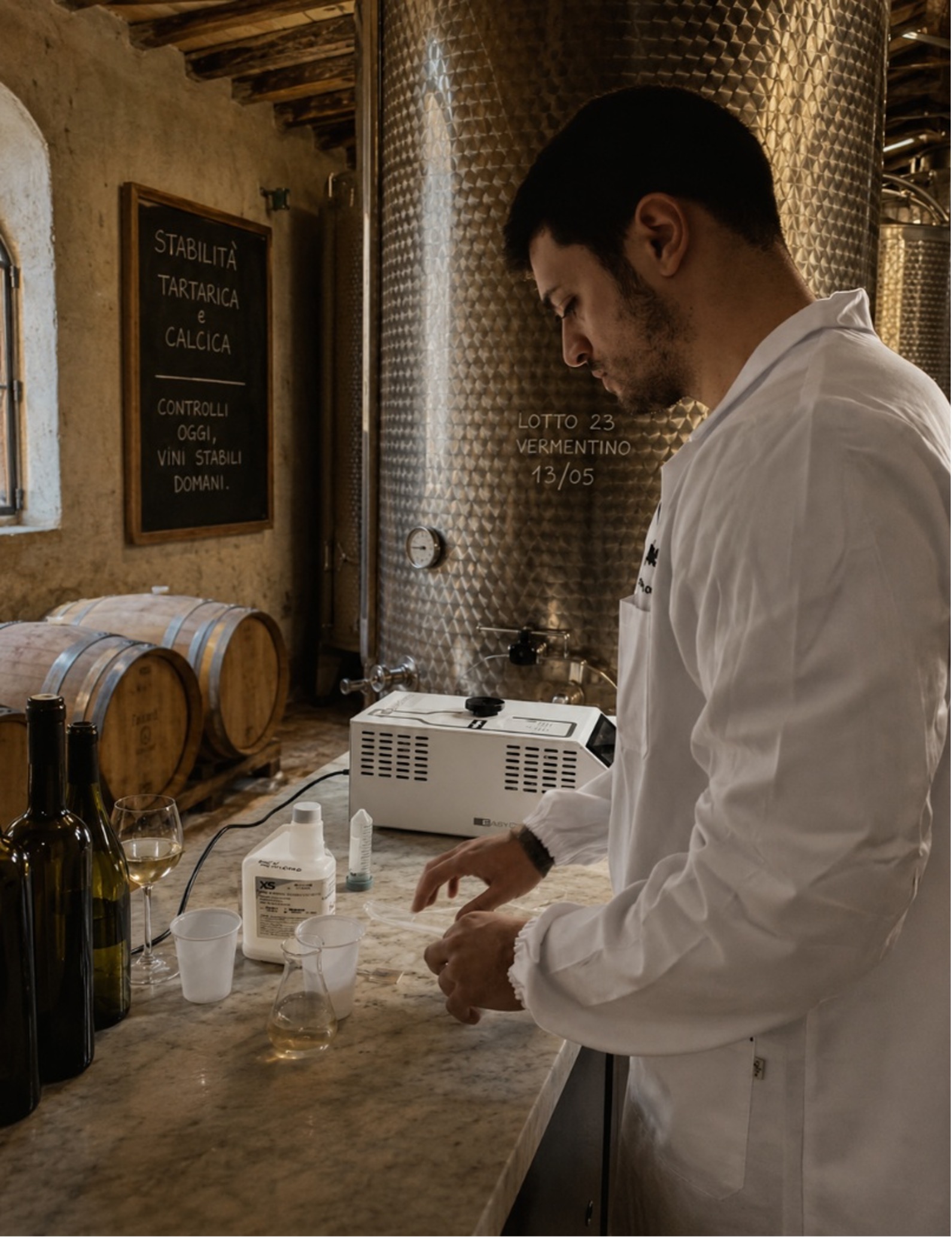
For a small or medium-sized winery, an analytical instrument must not only be reliable, but also easy to integrate into the normal workflow.
EasyCheck has been designed with an intuitive interface that guides the operator through the different stages of the analysis.
The aim is to reduce operational complexity and make stability testing accessible even to wineries without a large in-house laboratory.
Ease of use offers several advantages:
- reduces the time required to train operators;
- minimizes the risk of procedural errors;
- makes it easier to repeat analyses;
- provides the necessary information quickly;
- makes stability testing an integral part of the winery’s routine.
In this way, the winemaker or laboratory manager can access the data when needed, without depending on the availability and turnaround times of external laboratories.
Faster decisions based on objective data
Immediate access to results enables the winery to make faster, data-driven decisions.
It is possible to determine whether a treatment has been effective, whether further action is required, or whether the wine can proceed to the next stage of production.
This helps avoid both the risk of bottling a wine that is not sufficiently stable and the use of excessive or unnecessary treatments.
In-house monitoring therefore helps wineries to:
- optimize treatments;
- reduce uncertainty;
- plan bottling more effectively;
- avoid production delays;
- increase control over individual batches;
- protect the final quality of the wine.
The value of the instrument lies not only in the measurement itself, but above all in the ability to turn analytical results into immediate operational decisions.
An investment that can pay for itself quickly
The purchase of EasyCheck should not be considered simply as a laboratory expense, but rather as an investment aimed at improving winery efficiency.
When analyses are outsourced, every single test generates a direct cost. This is in addition to shipping expenses, the time required to manage samples, and potential delays while waiting for results.
With an instrument available in-house, wineries can significantly reduce the number of analyses outsourced while increasing the frequency of their stability checks.
The return on investment can come from several factors:
- reduced costs for outsourced analyses;
- lower shipping and sample-handling costs;
- shorter waiting times;
- improved bottling planning;
- reduced risk of reprocessing;
- optimization of stabilization treatments;
- greater autonomy for in-house staff.
The greater the number of batches analyzed throughout the year, the faster the investment can potentially be recovered.
A winery that regularly sends samples to external laboratories can therefore turn a recurring expense into a resource that is available every day within its own facility.
From cost per analysis to continuous monitoring
The main difference is not simply where the analysis is performed.
With outsourced testing, each analysis is often considered in terms of its individual cost. With an in-house instrument, on the other hand, testing can be performed whenever it provides useful information for the production process.
This changes the winery’s approach, encouraging a stronger focus on quality.
Instead of testing only when strictly necessary, wineries can monitor the evolution of their wines more regularly.
The ability to repeat analyses makes it possible to compare results before and after treatment and assess the effectiveness of each decision more accurately.
More testing means more information, and more information enables wineries to work with greater confidence.
Benefits for the entire winery organization
Introducing EasyCheck can have a positive impact not only on laboratory activities, but on the entire winery organization.
Production teams can plan their activities based on data that is available quickly. Winemakers can promptly assess the effectiveness of treatments. Bottling managers can organize operations with greater certainty.
Management can also benefit from reduced external costs and greater operational autonomy.
The instrument therefore becomes part of a broader process of improving winery efficiency, in which analytical data supports quality, productivity, and cost management.
Greater autonomy, less waiting
For a small or medium-sized winery, being autonomous does not necessarily mean having a complex laboratory.
It means having the right instruments available to perform the most important checks in-house.
EasyCheck enables wineries to monitor tartaric and calcium stability without continuously sending samples to external laboratories, reducing both time and costs while maintaining greater control over the process.
The winery can therefore take action when necessary, verify the results of stabilization treatments, and plan bottling with greater confidence.
EasyCheck: stability under control
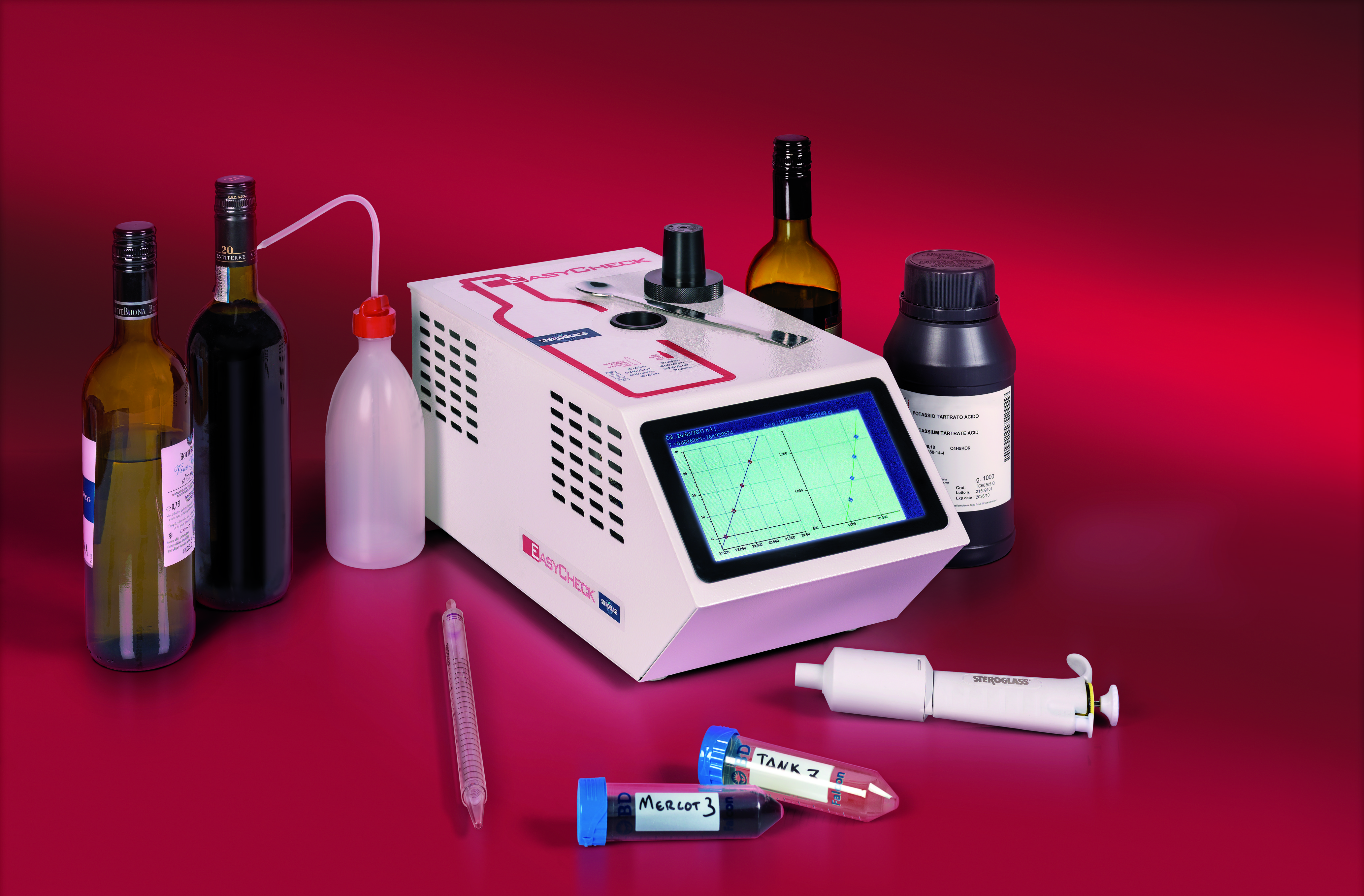
Tartaric and calcium stability is essential for preserving wine quality over time and reducing the risk of precipitation in the bottle.
With EasyCheck, Steroglass provides wineries with a solution designed to make this type of testing simple, fast, and accessible.
An instrument that enables wineries to:
- work independently;
- obtain useful information quickly;
- reduce reliance on outsourced analyses;
- increase the frequency of testing;
- optimize stabilization treatments;
- ecover the investment through cost savings and improved operational efficiency.
Because bringing stability testing directly into the winery means not only reducing costs, but above all making better decisions exactly when they are needed.