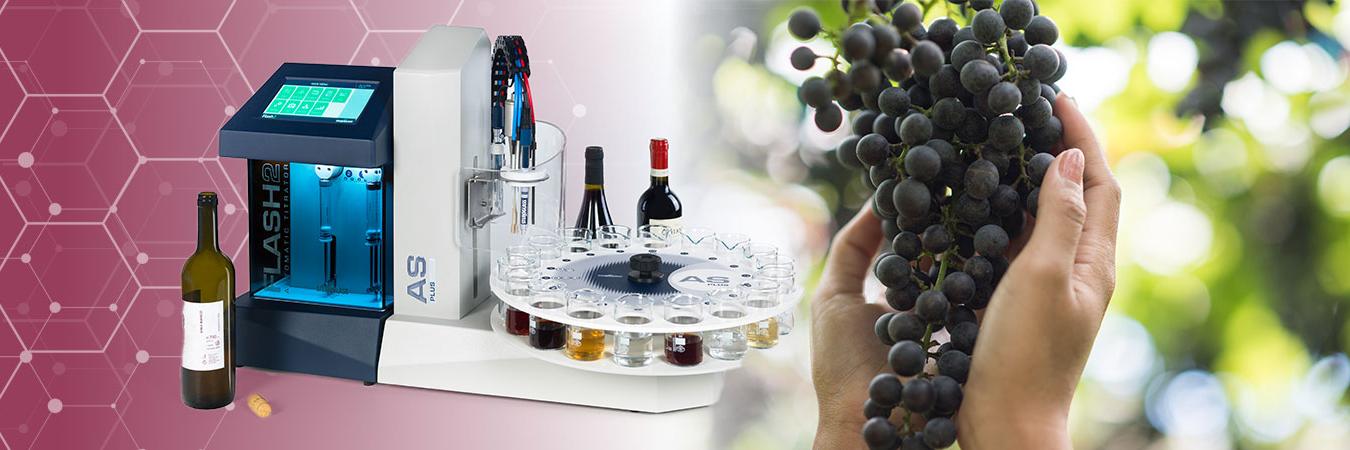
The determination of pH and Titratable Acidity (TA) in wines and musts represents a routine analysis with high decision-making impact in oenological process control. However, the presence of dissolved CO₂, subjectivity in determining the equivalence point, and operator-dependent variability are critical factors that compromise the accuracy, repeatability, and comparability of results obtained through manual methods.
The adoption of automatic titrators equipped with integrated degassing systems and digital endpoint control eliminates these interferences, ensuring traceable, reproducible measurements compliant with accredited laboratory requirements.
Analytical role of pH and titratable acidity in oenological control
From an analytical perspective, pH and Titratable Acidity are two distinct yet complementary parameters:
- pH is a potentiometric measurement expressing the concentration of H⁺ ions in solution and directly influences:
o microbiological stability,
o redox balance,
o the molecular (active) SO₂ fraction,
o protein and tartrate stability,
o freshness perception and color;
- Titratable Acidity (TA) is a volumetric determination that quantifies the amount of strong base (NaOH) required to bring wine/must to neutral pH, providing an overall indication of total acid content expressed in g/L.
In accredited laboratory environments, the accuracy of these parameters is essential for:
- monitoring fermentation processes,
- validating corrective treatments,
- ensuring compliance with production specifications,
- achieving inter-laboratory reproducibility.
CO₂ Interference: Chemical and Metrological Impact
Dissolved CO₂ represents one of the main sources of uncertainty in Titratable Acidity determination. In samples that are not properly degassed, carbon dioxide:
- hydrates to form carbonic acid (H₂CO₃),
- participates in the titration reaction with NaOH,
- generates bicarbonates (HCO₃⁻),
- causes additional titrant consumption not related to the wine’s organic acids.
From a metrological standpoint, this leads to:
- systematic overestimation of Total Acidity,
- poor repeatability between successive analyses,
- non-comparable results between operators or laboratories.
In fermenting musts or young wines, where CO₂ content is high, this interference becomes particularly critical, making manual methods unreliable when effective and standardized degassing is not performed.
Intrinsic limitations of manual titration
In addition to CO₂ interference, manual titrations present further critical issues:
- Subjective determination of the endpoint, based on colorimetric indicators such as bromothymol blue, whose transition range (pH 6.0–7.6) introduces significant uncertainty;
- Operator-dependent variability, linked to experience, visual perception, and environmental conditions;
- Use of inadequate glassware, Class B burettes, and/or burettes with excessively large diameters;
- Manual calculation errors in final Total Acidity determination;
- Long preparation and analysis times, incompatible with frequent and systematic process control.
These limitations make it difficult to meet the repeatability, reproducibility, and traceability requirements expected in modern laboratories.
Automation of titration and equivalence point control
Next-generation automatic titrators overcome these limitations through:
- potentiometric determination of the equivalence point,
- accurate pH meter calibration (up to 3 points),
- continuous pH monitoring during titration,
- automatic calculation algorithms,
- full standardization of the analytical procedure.
However, proper CO₂ management remains essential and must be effectively removed before titration begins, without altering the sample matrix.
Flash2 and the Integrated Degassing System: A Unique Approach
Flash2, the fifth generation of Steroglass automatic titrators, was designed with a precise objective: to eliminate major sources of analytical uncertainty at their origin by integrating all critical steps into a single automated cycle.
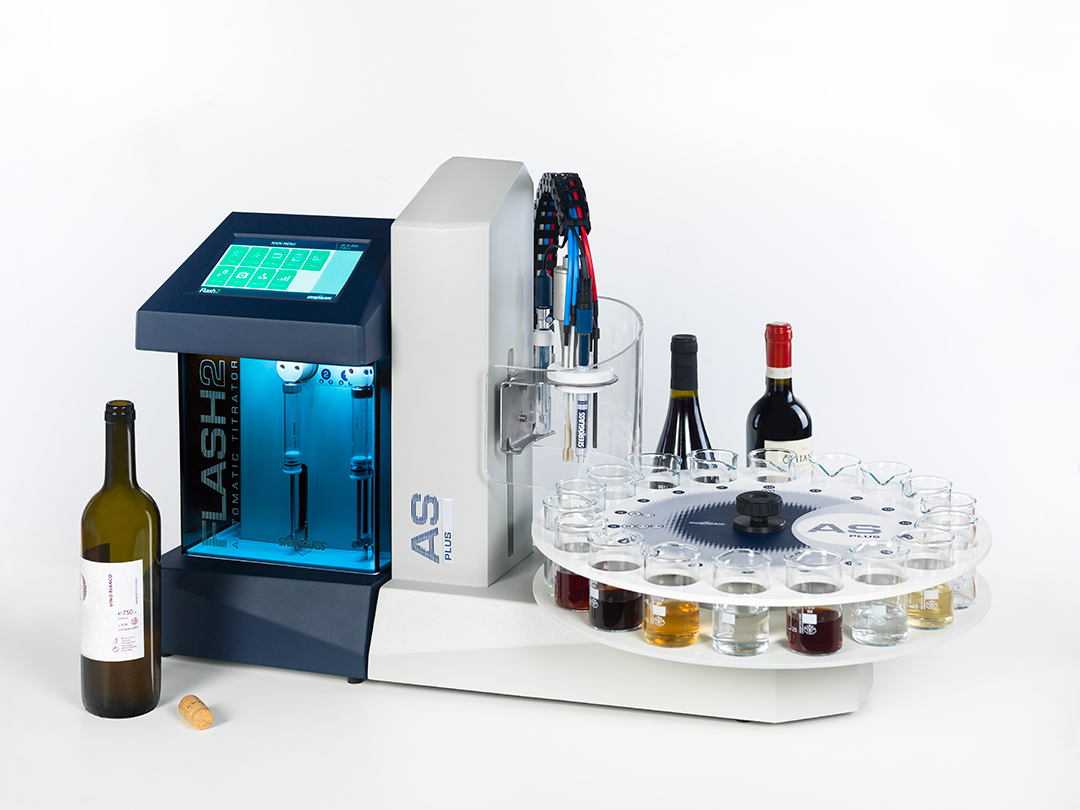
The integrated degassing system of Flash2, unique in its kind, enables:
- controlled and reproducible removal of dissolved CO₂,
- complete elimination of carbonic interference,
- stabilization of the potentiometric signal,
- Total Acidity titration compliant with reference methods.
Unlike external or manual systems, degassing occurs:
- without operator intervention,
- under controlled conditions,
- within the analytical sequence,
- with perfectly repeatable results.
Repeatability, Safety, and Data Management
Full automation of the analytical process allows Flash2 to:
- drastically reduce intra- and inter-operator variability,
- improve precision and repeatability,
- reduce analysis time by up to 90% compared to manual methods.
From a safety standpoint, operators are no longer exposed to:
- direct handling of chemical reagents,
- repetitive and potentially hazardous operations.
Digital data management also ensures:
- complete traceability of analyses,
- automatic result archiving,
- LIMS system integration,
- support for validation and continuous quality control.
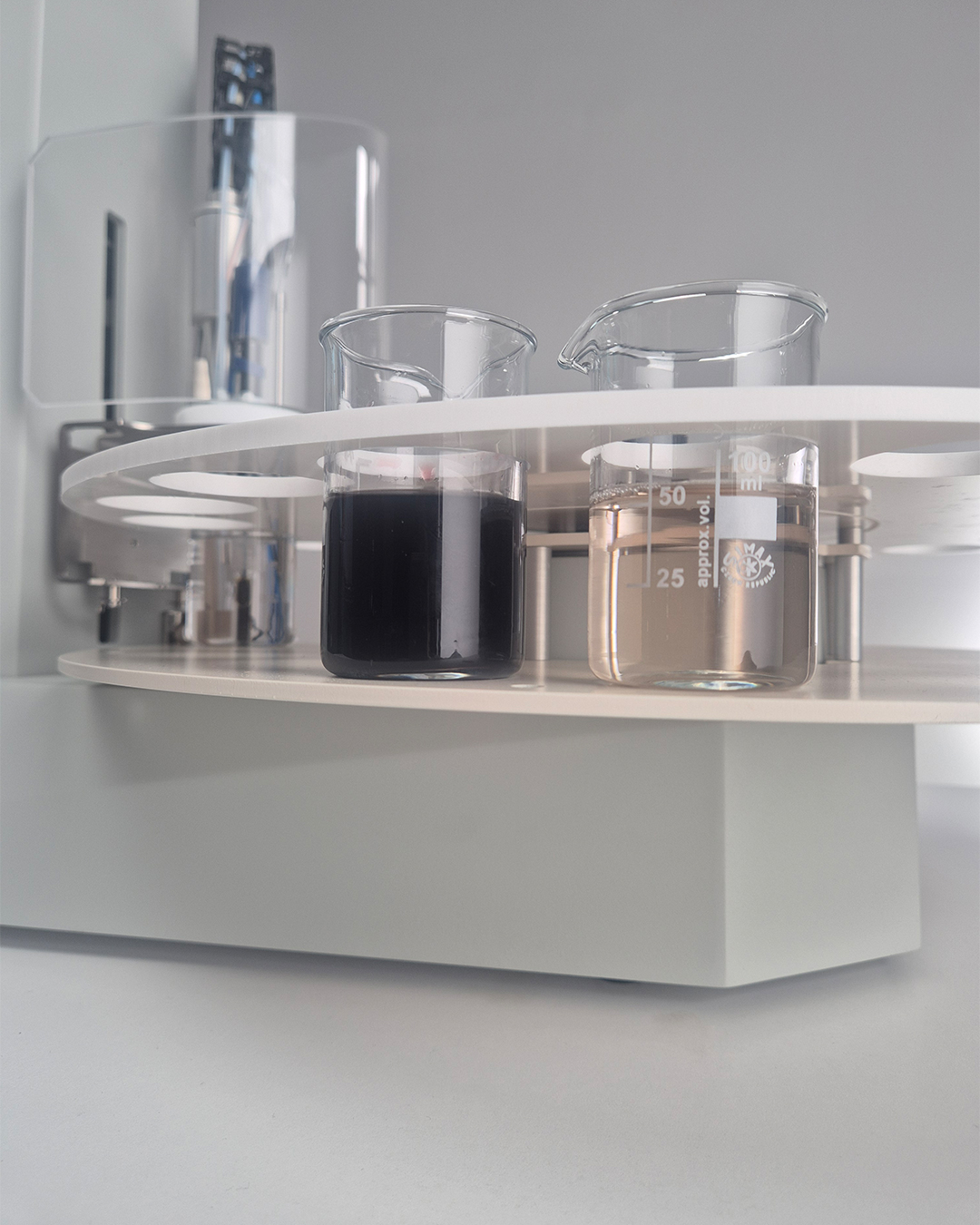
Towards a more accurate determination of pH and Titratable Acidity
In an oenological context increasingly oriented toward quality, traceability, and standardization, the correct determination of pH and Titratable Acidity requires instruments capable of eliminating the main sources of analytical error.
Thanks to its unique integrated degassing system, Flash2 represents a technologically advanced solution for laboratories and wineries requiring reliable, reproducible results compliant with the highest analytical standards.