The FOS/TAC ratio is one of the key indicators used to assess the stability of anaerobic digestion processes in biogas plants. Its reliability depends critically on the accuracy and repeatability of the acid-base titration employed to determine the FOS and TAC parameters.
Manual methods, still widely used in many operational environments, have limitations related to operator subjectivity, difficulties in accurately identifying titration endpoints, and poor standardization of the analytical procedure. The use of automatic titrators overcomes these limitations, transforming FOS/TAC analysis into a truly effective tool for process monitoring and control.
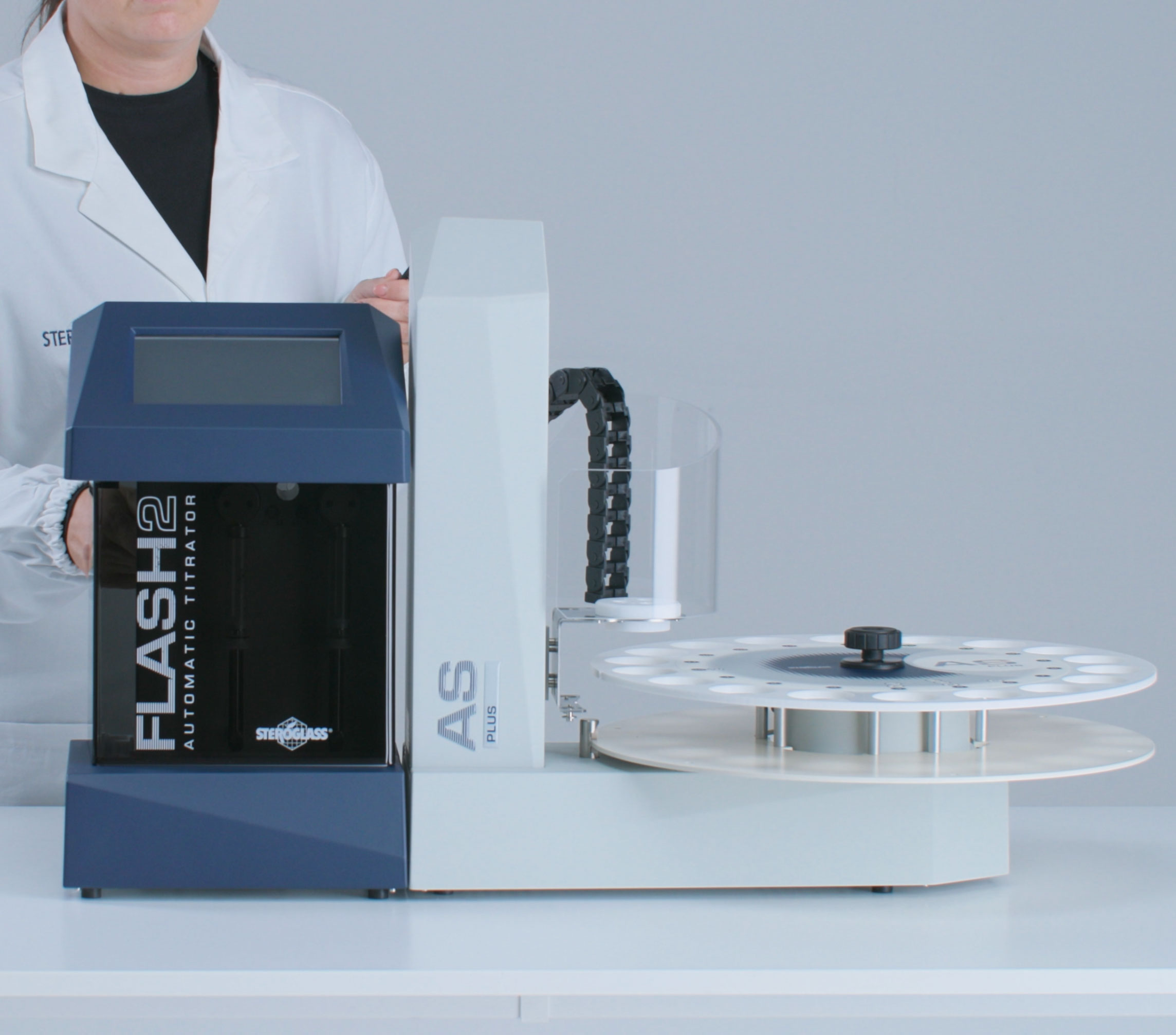
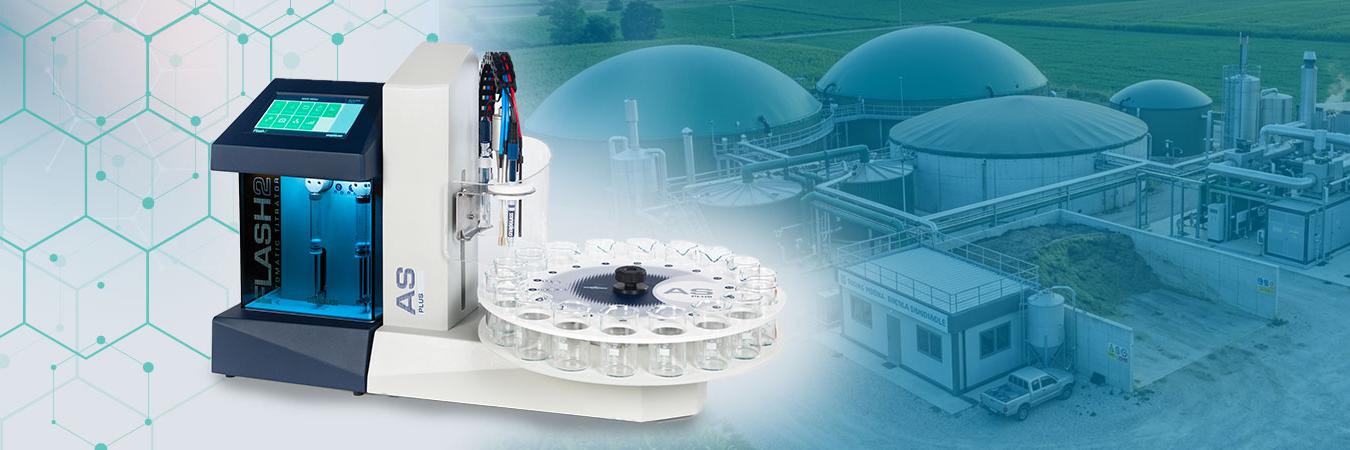
In this context, Flash2 represents an advanced solution for obtaining reliable, reproducible, and immediately actionable data to support operational decision-making.
The FOS/TAC Ratio as a Tool for Anaerobic Process Control
In biogas plants, the FOS/TAC ratio (volatile fatty acids index / total alkalinity) is used as a key indicator of the equilibrium status of the anaerobic digester.
- FOS represents an index correlated with the concentration of volatile fatty acids (VFAs) present in the digester, which are responsible for the system's acid load.
- TAC represents the total alkalinity of the sample and provides an indirect measure of the digester's buffering capacity, primarily associated with bicarbonate concentration.
The ratio between these two parameters makes it possible to:
- detect organic overloading conditions at an early stage;
- monitor the risk of volatile fatty acid accumulation;
- prevent digester acidification;
- optimize feedstock and substrate management;
- maintain stable and efficient biogas production.
For the FOS/TAC ratio to serve as a reliable process indicator, its determination must be rapid, accurate, repeatable, and comparable over time.
Limitations of Manual Methods for FOS/TAC Determination
Despite the relative simplicity of the procedure, manual determination of the FOS/TAC ratio presents several operational challenges:
- difficulty in accurately reaching the pH values required by the analytical method;
- strong dependence on operator experience;
- variability between successive analyses;
- potential reading and calculation errors;
- analysis times that are often incompatible with frequent process monitoring.
The determination of FOS and TAC parameters requires precise control of both titration and pH measurement, conditions that can be difficult to maintain consistently using manual procedures, especially in industrial environments.
Advantages of Automatic Titration in FOS/TAC Analysis
The use of an automatic titrator is a fundamental step in transforming FOS/TAC analysis from a simple indicative measurement into a true process control tool.
Key advantages include:
- automatic and precise control of the titration endpoints defined by the method;
- high analytical repeatability, essential for interpreting long-term trends;
- standardized analytical procedures regardless of the operator;
- significant reduction in analysis time;
- elimination of calculation errors through automatic result processing;
- greater reliability of the data used for operational decision-making
These benefits make automatic titration the preferred solution for monitoring anaerobic digestion processes in both laboratories and industrial biogas plants.
Flash2 as an Automated Solution for FOS/TAC Analysis
Flash2, the automatic titrator developed by Steroglass, is specifically designed to meet the monitoring and control requirements of biogas plants. Thanks to complete automation of the titration procedure, Flash2 enables users to:
- perform FOS/TAC analyses simply, quickly, and reproducibly;
- reduce both intra-operator and inter-operator variability;
- obtain reliable results even with complex matrices such as digestate;
- make the analysis accessible to non-specialized personnel.
In addition, the digital management of methods and results allows users to:
- automatically store analytical data;
- easily compare results over time;
- monitor process evolution through trend analysis;
- support rapid operational decisions based on objective and traceable data.
In a context where the biological stability of the digester directly affects plant productivity and efficiency, the availability of reliable and repeatable analytical data is an essential requirement for effective anaerobic process management.